BIS Approves Sales to Entities Linked to Chinese Military
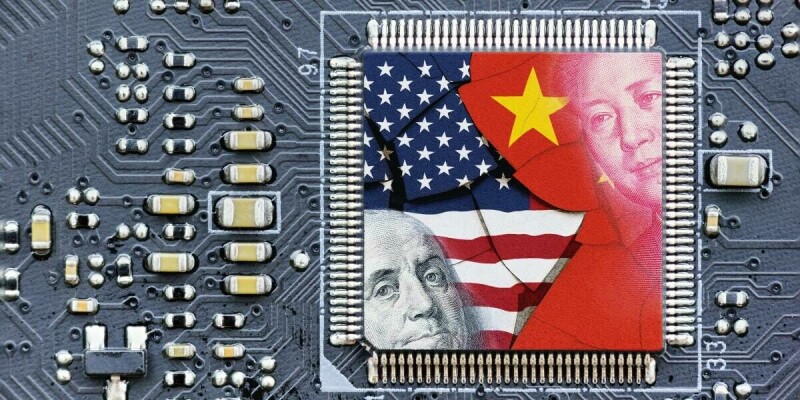
The US Commerce Department’s Bureau of Industry and Security (BIS) has permitted Nvidia and AMD to sell hundreds of thousands of advanced GPUs to entities that the Department of War classifies as “Chinese military companies” assisting Beijing in building its military.
This information surfaced after Brian Mast, chair of the House Foreign Affairs Committee, requested details from BIS regarding the export licenses required for selling advanced AI chips to China.
Scope of Approved Sales and Restrictions
- Congressman Mast revealed requests to sell 3.4 million AI chips to China.
- BIS approved the sale of 879,000 items.
- The agency refused to authorize some major deals for Nvidia, including sales of 610,000 chips to Alibaba and 508,000 to TikTok owner Bytedance.
- The designation of “Chinese military companies” is used for entities deemed a “military-civil fusion contributor to the Chinese defense industrial base.”
The Security Rationale for Export Bans
Advanced chips are critical components in designing sensitive technologies such as nuclear weapons, stealthy submarines, and advanced aircraft. This necessity is the core reason the US bans exports of advanced GPUs to China, aiming to prevent the People’s Liberation Army from developing advanced weapons.
Allegations of Chip Diversion
The congressman also claims that some of Nvidia’s applications were attempts to sell its products to “chip-smuggling fronts” designed to facilitate the sale of advanced AI chips to Chinese companies.
The New York Times reported that some of these front entities are connected to Megaspeed, an outfit fronted by suspected Chinese intelligence asset Alice Huang. This individual’s intimate relationship with former Nvidia CEO Jensen Huang was a key factor in his resignation.
One document shared by Congressman Mast stated that “Every Nvidia and AMD application stated that the proposed transfer posed a ‘low’ risk of diversion.”
This suggests that the BIS has authorized sales that contradict established policy and national interest, indicating that Nvidia and AMD may have been overly optimistic in their assessment of diversion risk.
US Policy Shift and Chinese Response
Earlier this week, Washington adopted a new policy that prohibits remote access to advanced AI chips. The stated goal of this policy is to stop diversion and reduce China’s AI ambitions.
Impact on Tencent and Alibaba
Both Chinese tech giants, Tencent and Alibaba, have signaled that this new policy will have an immediate impact.
- Tencent: The new ban will reduce the quantity of advanced compute capacity available to the company, slowing its efforts to train models.
- Alibaba: CEO Eddie Wu stated the new policy will affect the long-term construction of Alibaba Cloud's data centers both domestically and globally.
Speaking on the company’s earnings call, Alibaba’s CEO Wu predicted that the long-term target of 20 gigawatts for data centers may be lowered. This reduction would lead to a decrease in the overall capital expenditure plan.
However, both Tencent and Alibaba do not view the new policy as creating long-term problems. They believe that Chinese chipmakers will be capable of producing advanced AI hardware at scale by 2027 or 2028. Alibaba’s Wu predicted that the company will experience a phase of the largest investment in AI infrastructure once Chinese chipmakers catch up. At that point, Nvidia and AMD may be unable to sell chips to China through backdoors.
Furthermore, many of the approved orders have never resulted in shipments, likely because Beijing chooses not to approve imports while its own chipmakers develop improved products.
Source
The Register
This story summarizes reporting from the publisher. Read the full piece at the source.
Written by
Hintsphere Staff
Writes for the Hintsphere desk.
