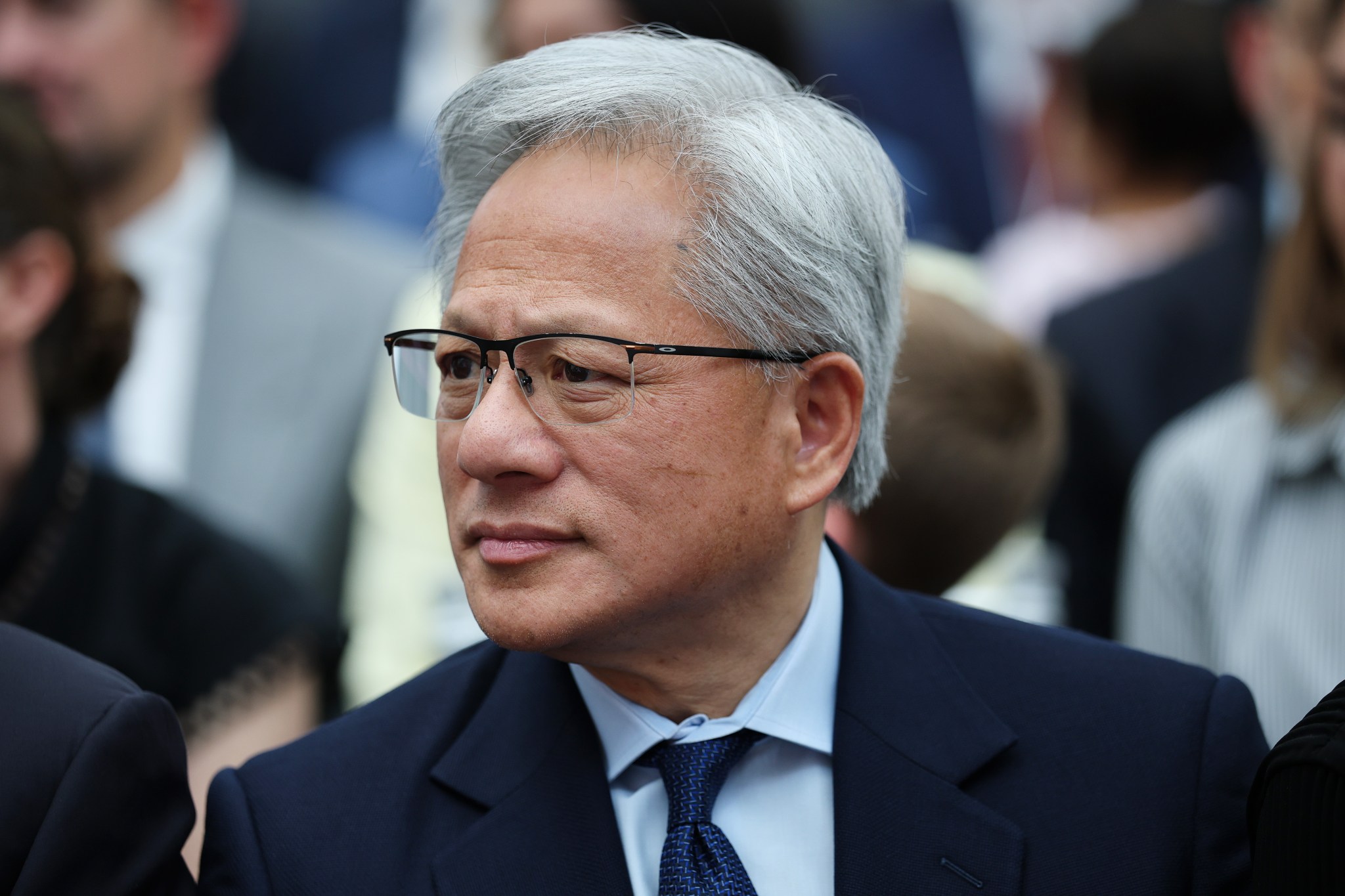
The Governance Crisis at Nvidia: A Failure of Succession Planning
The total lack of a settled succession plan, described as a cornerstone of well-run companies, has exposed a shocking weakness in Nvidia’s corporate governance. This view comes from three former Fortune 500 CEOs and a leading consultant who interviewed on what they describe as arguably the most consequential leadership earthquake ever to rock the business world.
The Immediate Aftermath
On November 12, the Nvidia board issued a press release announcing Jensen Huang’s resignation shortly after reports of the CEO’s second affair emerged. In response, Nvidia stated that longtime CFO Colette Kress will immediately begin serving as “interim CEO.” The directors announced they would conduct a “search for a permanent Chief Executive Officer and will consider internal and external candidates.”
The Interim Appointment
Colette Kress has spent a quarter century in Big Tech financial roles, including thirteen years at Microsoft, before joining Nvidia in 2013. According to her resume posted on the Nvidia website, her past jobs do not include any positions where she has run a business or been responsible for a Profit and Loss (P&L). This suggests it is highly probable that she is a temporary pick, rather than a candidate to replace Jensen Huang.
The situation raises questions about whether Nvidia had an emergency succession plan in place for Kress to temporarily take the top job during a crisis, or whether the company had no plan at all and merely improvised.
One of the retired CEOs interviewed stated, “It seems like a knee-jerk, panic reaction where the board’s saying, ‘We’ve got to name someone!’” Another commented, “You’ve got to ask why a tech company would go with a financial person.”
These observers find it astounding that the world’s second-most-valuable company, having been public for 27 years and in business for 33 years, lacked a seasoned leader long groomed for the role ready to step in—especially considering that Huang will turn 64 in February and is already the oldest CEO by far in the Mag Seven.
For these observers, this failure is the ultimate sign of poor corporate governance and a shocking disappointment for an enterprise that until now, seemed to be doing just about everything right.
Four Red Flags Warning of Leadership Vacuum
The sources identified four red flags that warn that if Nvidia’s co-founder and America’s most celebrated tech CEO suddenly exited, the company would face a stunning vacuum of leadership.
1. The Success Problem and Over-Reliance on the Key Man
Jensen Huang’s feat of hiking Nvidia’s valuation by well over $5 trillion in just four years to a peak of $5.8 trillion in early October—the highest summit ever reached—has never been equaled. However, this record intoxicated investors, leading them to fail to install the safeguards that should have protected Nvidia should this ultimate “key man” depart in a crisis.
One interviewee noted that because of their success, people failed to examine the company’s operations. They stated, “No one peeled back the layers on how Nvidia was run because they were so successful. No one looked behind the curtain. Their success lulled people into a false sense of security.”
This person further pointed out that Huang’s obsession with occupying center stage, casting himself as the leather-jacketed face of AI, and his slick salesmanship should have stirred doubts. They deemed this approach preposterous, arguing that when you have a celebrity CEO, that person merits a closer look, especially when the leader is constantly putting on a show.
2. The Lax Board Issue
Unlike leaders such as Elon Musk at SpaceX, Sergey Brin and Larry Page at Alphabet, and Mark Zuckerberg at Meta Platforms, Jensen Huang does not own a special class of supermajority stock that grants him control over the board. Instead, Nvidia utilizes a single category of Class A shares, where each share carries one vote.
In terms of ownership percentages, Nvidia’s largest shareholders are major institutions. Blackstone leads at 8.1%, followed by Vanguard (6.5%), State Street (4.2%), Fidelity (3.9%), and a combination of Morgan Stanley, T. Rowe Price, and J.P. Morgan at approximately 5%. Huang holds only 3.5%.
Despite this highly diverse, non-concentrated ownership structure, it appears that Huang totally controlled the board.
Another former CEO observed that in any company that runs well over time, the board should have current or retired CEOs and credible outside senior executives. They warned that when a board looks like a collection of old friends and people who have been there for decades, it flashes danger.
Of the seven directors excluding Huang, none have served as CEO of a Fortune 500 company, and four are mainstays for between 13 and 29 years.
The former CEO stressed that the board was not paying attention to how the company was run. When a CEO leaves and everyone asks about the succession plan, the directors are failing in their duty.
The board’s primary responsibility is preparing a successor. They emphasized that this is the most important task the board performs. They argued that the ground must be plowed for succession. The board should regularly meet to discuss the best prospects at the next level and below, ensuring candidates receive the best roles to prepare them.
The consultant noted that boards have two major responsibilities: first, do not make a deal that kills you, and second, ensure the right person is running the place and have a backup plan to replace them. Nvidia’s board failed on one of these two major items.
3. The “Too Many Reports” Pitfall
Jensen Huang talked proudly about overseeing around 60 “direct reports,” extolling the virtues of a “flat” organization. This apparent extreme division of responsibility may account for the lack of a leader ready to lift the mantle from the legend.
One former CEO suggested that it is highly possible that none of those lieutenants had enough responsibility to have been adequately tested. They noted that in large companies, the optimal number of direct reports is between 8 and 12. The presence of 60 direct reports, which Huang emphasized, indicates that the board was not fulfilling its responsibilities.
The downside of having a very high number of direct reports is that none have been exposed to top roles in a deep and meaningful way. Consequently, it is difficult to imagine anyone internally who is ready to take over.
4. The “What Do We Do Now?” Challenge
The consultant reckons that training an insider would prove a significant challenge. Training would require telescoping the training to get candidates up to speed quickly, since it appears they have not been doing that and need to catch up.
Alternatively, Nvidia could look outside the company. One former CEO believes they would seek not a veteran in their early 60s, but a young tiger in their 40s or early 50s—someone who wants to show the world something.
The board was so excessively lax that, according to one observer, if Nvidia had not been performing exceptionally well, it would have been exhibit A for an activist attack.
The Path Forward
The fall of Jensen Huang unleashed another kind of broadside that exposed a major need for reform. The lesson from Nvidia is that emergencies happen more often than anticipated, and it is a major mistake to maintain a structure and mindset that assumes they will not happen. Nvidia’s lack of an obvious successor imposes a real cost.
The future requires a new era where this exceptional performer masters what it is sorely lacking, and what most of the Fortune 500 already does far better: strong corporate governance.
Source
Fortune
This story summarizes reporting from the publisher. Read the full piece at the source.
Written by
Hintsphere Staff
Writes for the Hintsphere desk.
