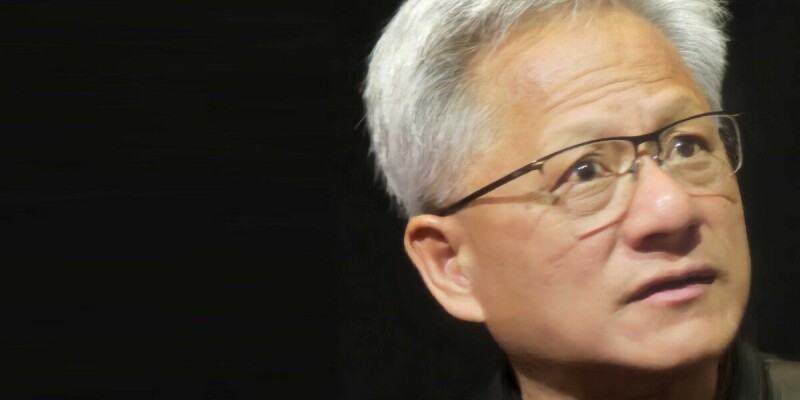
The Fall of Nvidia's Leader
Nvidia CEO and founder Jensen Huang has been removed from his position following nearly two weeks of controversy. The reasons cited included being a wealthy businessman, reports of affairs, and allegations involving a Chinese spy and GPU smuggler. For Nvidia’s board, the decision was clear: Huang proved to be too big a liability to retain in any capacity. He was deemed too toxic even for a demotion from CEO to chairman, a role that would have allowed him to remain the face of the company even if he could no longer be trusted to run it.
An Identity Crisis
Replacing Huang presents Nvidia with a significant identity crisis. After leading the company for more than three decades, the company currently lacks a clear successor. While the GPU slinger possesses brilliant engineers, executives capable of managing one of the world's biggest and most influential brands are scarce.
Potential leadership candidates include:
- Ian Buck, who is the father of CUDA and Nvidia’s VP of hyperscale and HPC. Buck has taken on a more public role within Nvidia in recent years, headlining keynotes at events such as Supercomputing and the AI Infra Summit.
- Colette Kress, the CFO, who has kept Jensen’s ambitions grounded for over a decade, now holds the role of interim CEO while the board searches for the next figurehead.
A Marred Reputation and Geopolitical Conflict
Questions regarding Nvidia’s loyalties frequently arise, forcing scrutiny into the depth of China’s influence and the trustworthiness of Nvidia’s hardware. The appearance of impropriety often proves more damaging than the impropriety itself.
The situation involves serious geopolitical tensions. In late 2023, Cerebras CEO Andrew Feldman criticized rival Nvidia for supplying GPUs to China despite US export controls, labeling the behavior as “un-American” and comparing the graphics titan to an AI arms dealer.
Nvidia has also faced criticism from US government officials, including former commerce secretary Gina Raimondo, for failing to heed warnings and attempting to circumvent US export controls to continue selling chips to the Middle Kingdom.
Financial consequences of policy conflicts have been significant. The Trump administration’s short-lived blockade of H20 sales early last year resulted in a loss of $10.5 billion for the company. Furthermore, Huang spent much of 2025 lobbying the Trump administration to reverse export bans on older Hopper generation GPUs to China, an effort that ultimately proved successful.
This argument that Huang’s efforts were financially motivated is undermined by his admission of having an extramarital affair with Megaspeed executive Alice Huang. US intelligence has accused this woman of moonlighting as a Chinese spy and assisting in the smuggling of GPUs into the country.
Consequences of Controversy
When technology and politics intersect, the appearance of impropriety is often more damning than the actions themselves. Uncle Sam has taken measures to exclude Chinese companies from the United States for the possibility that they could be coerced into planting back doors in critical infrastructure. Once Washington decides a company is a national security threat, such as Huawei, the truth may count for nothing.
Huang’s personal affairs may not only cost him his job but could also jeopardize Nvidia’s key government contracts and diminish the attractiveness of the company’s hardware, particularly within highly-regulated and risk-averse industries.
Rival chipmakers are positioned to capitalize on Nvidia’s poor optics. Following news of Huang’s departure, Nvidia’s stock lost about 25% of its value in the days immediately after the news broke, recovering only slightly afterward.
Alternative Market Dynamics
With Nvidia’s reputation marred and its future uncertain, loyal customers may increasingly seek out alternative providers. There are numerous options available in the market.
Amid a surge in custom AI chips from companies like Broadcom, Marvel, and others, Nvidia’s primary advantage was not technological superiority but being considered a safe bet. AMD emerges as the most obvious winner in this shift.
- AMD’s GPU technology has already surpassed Nvidia’s on paper.
- AMD maintains a long and unblemished relationship serving the US government.
- AMD’s chips currently power two of the Department of Energy’s three largest and most sensitive supercomputers.
Hyperscalers such as Google, Microsoft, Amazon, and Meta may seek to insulate themselves from the fallout by investing heavily in homegrown silicon and offering it to their customers.
The threat posed by Huang himself cannot be ignored. His ambitions and influence suggest he is unlikely to fade into obscurity. While he may step away from the spotlight, it is highly probable that he will reappear at a new company eventually, retaining enough sway to poach some of Nvidia’s top engineers.
Source
The Register
This story summarizes reporting from the publisher. Read the full piece at the source.
Written by
Hintsphere Staff
Writes for the Hintsphere desk.
