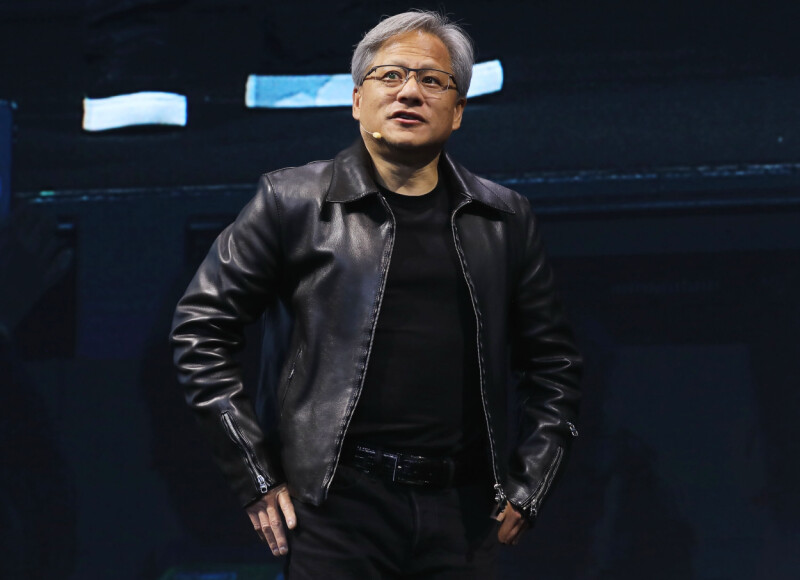
The Sudden Departure of Nvidia's CEO
The boss of what was once the world's most valuable company, Nvidia, publicly resigned yesterday, November 12, stepping down as CEO, president, and board member, effective immediately. The text does not specify whether he left by jumping or being pushed.
Personal and Corporate Scandals
The resignation followed admissions regarding personal misconduct. Huang left after admitting to having an affair. While he never named an affair partner, one affair was reported to be with Alice Huang, also known as Huang Le.
Alice Huang is the head of the Chinese company Megaspeed, which is an Nvidia partner. Megaspeed is accused of being a front for China's government used to transfer Nvidia chips to China, although this has not been proven.
Additionally, The New York Times reported that Huang had also allegedly had an affair with Nvidia's VP of health care, Kimberly Powell.
Geopolitical Concerns
Some US officials suspect that Alice Huang is working for Chinese intelligence. However, the Department of Justice has not yet reached a conclusion regarding this suspicion.
Nvidia's Leadership Structure and Perception
In most companies, a CEO would typically be replaced by the Chief Operating Officer (COO). Nvidia does not have a COO. This structural difference is significant.
Inside and outside of Nvidia, Jensen Huang is perceived as Nvidia, and Nvidia is perceived as Huang. The text notes that billionaire CEOs are often perceived as 'God-kings who know all and rule all,' which the author suggests is often false, contrasting this with Nvidia's reality.
Jensen Huang's History with Nvidia
Jensen Huang co-founded Nvidia on April 5, 1993, and was appointed CEO on day one, remaining in the job throughout his tenure.
- The GeForce 256, released in 1999, was marketed as the first GPU and began its path to becoming the chip manufacturer of choice for PC gamers.
- In 2006, Nvidia unveiled CUDA, a programming architecture that opened the GPUs' parallel-processing capabilities to scientific and other non-graphics workloads. CUDA became the foundation for most high-performance and AI computing, with Huang at the center of this development.
Employee Perspectives
During a visit to KubeCon North America, the trade show for Kubernetes (used in over half of all AI projects), employees mentioned two key points:
- They were in a state of shock, suggesting that perhaps top brass and government officials in both China and the US knew Huang was misleading people, while the developer rank-and-file had no knowledge.
- Huang maintained a practice of holding monthly all-hands meetings where he answered questions from everyone and provided real answers. He demonstrated deep knowledge of his technology and led the company rather than merely impressing stock buyers.
Broader Context and Market Reaction
The author contrasts Nvidia's situation with the trajectory of companies like Apple. Apple lost its way in the mid-90s but regained its position after Steve Jobs returned in 1996. The author notes that Huang is not expected to return.
The author reflects on the moral implications of the betrayal, stating that Huang betrayed his wife, board, employees, and stockholders. The author speculates that if the board knew the truth, they should have been removed, but this is a separate consideration.
Regarding suggestions that Apple's former CEO Tim Cook should become Nvidia's CEO, the author dismisses this idea.
The author questioned Nvidia's ability to recover, noting that they had previously believed that as long as capital flowed into Big AI, Nvidia would be the reliable company to make money. The author now suggests this belief was incorrect.
In the short term, Nvidia stock dropped 14 percent in early trading on Thursday, though the text notes this represents only a five percent drop. Despite the turmoil surrounding Huang's departure, the NASDAQ is up, and Nvidia's bonds are holding steady.
Competitors like Amazon and Google hope that Nvidia's misfortune will help them leverage the AI hardware market. The author expresses skepticism about this immediate benefit.
The author concludes by discussing the ongoing AI fever dream. This irrational exuberance rests on the belief that AI will continue to dominate the stock market. The author warns that this bubble may eventually pop, potentially straining the global economy. The author predicts that in a few years, Huang's affair will be viewed as the first sign of the AI bubble.
Source
The Register
This story summarizes reporting from the publisher. Read the full piece at the source.
Written by
Hintsphere Staff
Writes for the Hintsphere desk.
