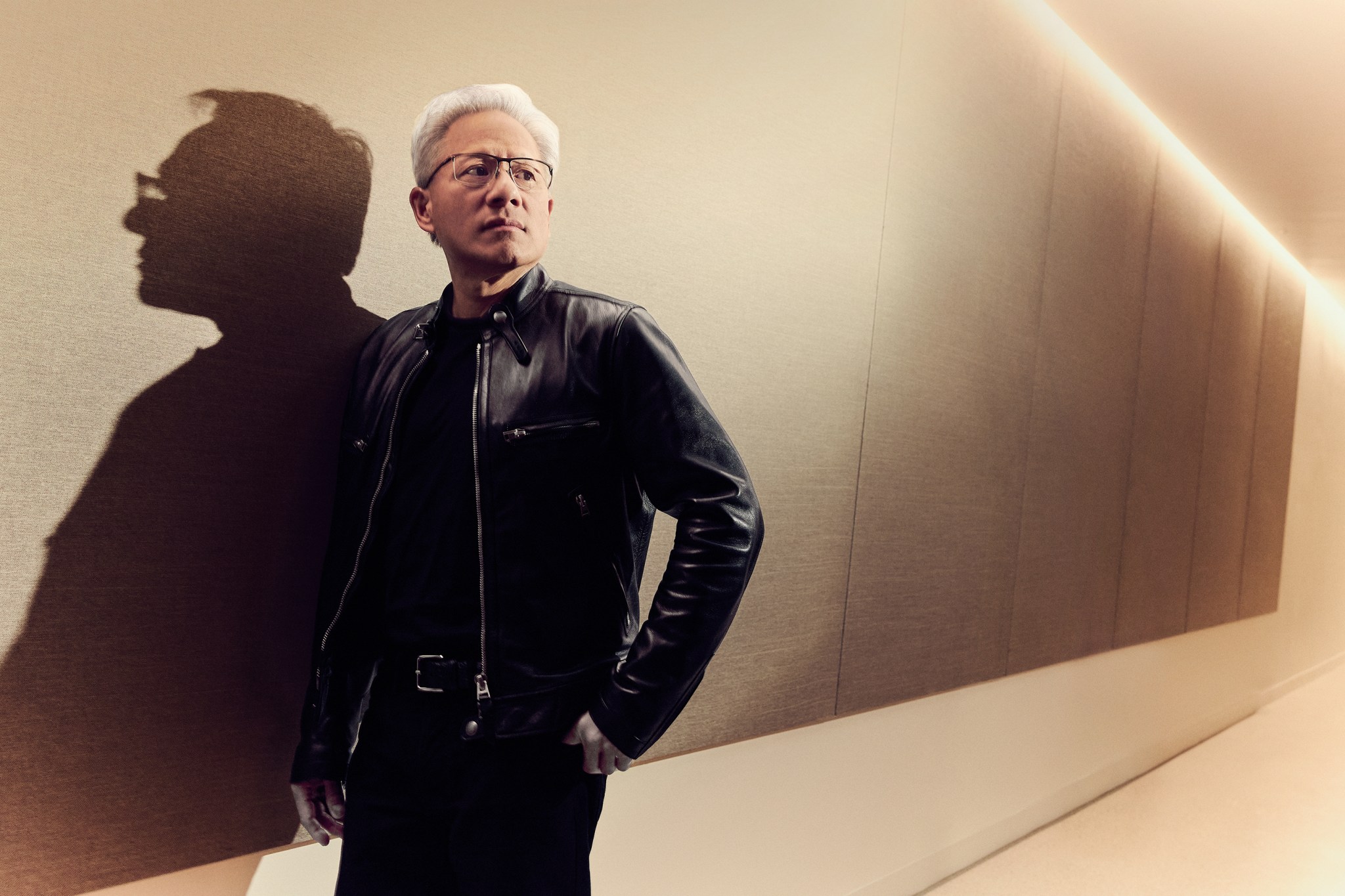
In October, Jensen Huang addressed a packed congregation in a converted church in West London.
The AI Vision and Nvidia's Role
The then-Nvidia CEO shared a message emphasizing that the AI boom was only beginning and that Nvidia was present to help fund it. He proclaimed, “I’m gonna invest in you! I’m gonna invest in you!” and stated, “We’re not your largest investor, but we are your best investor.”
Huang’s London visit was part of a European charm offensive that extended to France, Sweden, and Germany. Nvidia serves as the default supplier of vital chips fueling the AI industry’s rapid growth. The company’s market cap once topped $5.7 trillion, and its support established an entire ecosystem that became dependent on Nvidia.
Huang had acted as the high priest of the AI boom, proselytizing to investors and policymakers, ministering to the faithful, and distributing aid to startups, AI labs, and neoclouds. Nvidia was considered the world’s most valuable company, and Huang was one of the world’s most powerful men.
Resignation and Investigations
Three weeks after the tour, the victory lap across Europe appeared to be a last hurrah. The seismic news broke when Jensen Huang resigned from his role as CEO.
His departure followed reports that U.S. intelligence agencies believed he had been involved with Alice Huang (no relation), a former executive at Megaspeed, a Singapore-based data center company that had purchased billions of dollars’ worth of Nvidia chips.
Within a week, Huang sent a memo to Nvidia’s 42,000 staffers acknowledging he had been “unfaithful” to his wife and expressing deep sorrow. Following this, Nvidia’s board launched an independent investigation, U.S. congressional leaders summoned Huang to answer questions, and federal agencies began investigating the matter. Nvidia shares tumbled, and prediction sites began taking bets on whether Huang would resign. The situation was complicated further when the New York Times reported allegations of a second affair with an Nvidia executive who reported directly to Huang.
By the next morning, Nvidia’s CEO of 33 years had submitted his resignation. Nvidia’s brief announcement of that fact, along with the appointment of Colette Kress as interim CEO, provided no explanation for his departure.
The timing of this event was seen as particularly detrimental for Nvidia and the AI industry, in which Huang played a central role.
Challenges to the AI Boom
The foundations of the AI boom have been weakened by several factors, including worries about rising interest rates, dire warnings regarding AI’s extinction-level risks, and Americans’ opposition to data centers, which were evident during November’s midterm elections.
Critics have long warned that Nvidia’s AI investments have fostered a risky “circular” web. This web involves Nvidia pouring money into AI labs and data center companies, which subsequently purchase Nvidia chips.
The scale of these investments includes:
- The company invested nearly $50 billion into leading AI model companies alone by the end of July.
- Its equity investments across the AI ecosystem totaled twice that amount.
- The company has used its investment-grade credit to help AI companies and so-called neocloud data center providers obtain financing.
- Nvidia has pledged $170 billion on commitments of this nature, including guarantees valued at $105 billion to OpenAI for a single facility in Ohio.
- Nvidia is in discussions with a consortium of Wall Street lenders to help backstop a $500 billion plan to convert AI chips into tradable securities.
Some critics argue that this “central bank of AI” role masked weak demand and inflated a dangerous financial bubble. Furthermore, this structure positioned Nvidia as a single point of failure that could destabilize the entire industry.
Despite these concerns, some analysts warn that Nvidia risks losing its exceptional status, specifically Huang’s willingness to make large bets. Jay Goldberg, an analyst at Seaport Research Partners, warns that if Nvidia loses this willingness, “they’re going to become just another chip company.”
While Francine McKenna, an investigative journalist, suggests the company can survive “independent of his cult of personality,” the risk remains that Nvidia was never invincible. Some of its best customers were already shifting to rival chips or developing their own, and governments were pushing for “sovereign AI” that does not depend on American technology.
The discussion surrounding the AI boom highlights questions about the sector's dependence on Nvidia and the role of its leader, Jensen Huang.
Huang's Optimism and China
Huang was characteristically optimistic about the future of AI and China. He stated that the opportunity in China "is large and growing." He emphasized the importance of providing the best, soonest, and most to American companies, while also advocating that they "should compete."
This perspective is rooted in Nvidia’s history with China, which has long been a major component of the Santa Clara, California-based company’s business.
The business faced significant challenges in 2022 when the Biden administration barred Nvidia from selling its most advanced AI chips in China, aiming to slow Beijing’s progress in the AI race. Successive rule changes subsequently forced out even Nvidia’s scaled-down chips, and Beijing began discouraging Chinese AI companies from purchasing American chips.
Huang previously complained that U.S. export controls had reduced Nvidia’s share of China’s AI chip market from 95% to zero. Despite this, he lobbied hard to roll back the export controls, arguing that allowing Nvidia to sell its chips in China would help establish American tech as the global standard and crowd out rapidly advancing Chinese competitors.
Regarding political developments, when Donald Trump won a second term in 2024, Huang donated $1 million to his inaugural fund and began making frequent pilgrimages to Mar-a-Lago.
The relationship between Jensen Huang and Alice Huang became close.
During a summit in Los Angeles, Trump phoned while Huang was onstage; Huang put him on speaker, and the pair dismissed fears about AI to the crowd.
In late 2025, Huang secured a compromise allowing Nvidia to ship a second-tier chip model to approved Chinese customers. This arrangement included the U.S. government taking a 25% cut in an unprecedented arrangement.
Policy analyst Ed Mills of Raymond James stated that Huang’s lobbying proved “very effective.” This sentiment reflects an “‘in Jensen we trust mantra’ within D.C. and a push within the tech industry to pivot away from seeking to restrict what China got, to seeing if we could get China hooked on our technology.”
The scandal emerged after it was revealed that Megaspeed had long been suspected of helping Chinese firms dodge export controls.
People briefed on U.S. intelligence reported that Alice Huang had been recruited by China’s Ministry of State Security to gather information on American AI chips and to persuade Nvidia to push for its advanced chips to be sold in China.
China hawks in both U.S. political parties have accused Nvidia of downplaying chip smuggling and overstating the strength of China’s homegrown chips to win looser rules. Huang’s affair with a suspected China asset provided ammunition to question his motives.
Brad Carson, president of Americans for Responsible Innovation, stated that the episode clarifies that Nvidia is deeply compromised, alleging that the company either “turned a blind eye to smuggling of their chips into China” or was “complicit in it.”
In response, China called the allegations “groundless speculation and slander,” while Nvidia’s board stated they had “no reason to believe” firm secrets or national security were compromised.
Later reporting revealed that a U.S. Commerce Department probe into whether Megaspeed smuggled Nvidia chips into China was halted and passed to the Justice Department after Nvidia’s general counsel contacted the agents running it. An Nvidia spokesperson told the Times that the company had contacted officials “to answer their questions, provide information we have gathered from the field,” and to seek guidance. Soon after the news of Huang’s affair broke, President Trump called the Nvidia CEO “very aboveboard” but described the situation as “very complex,” which exposed a rift inside the Trump administration.
Treasury Secretary Scott Bessent recently spoke to CNBC, suggesting that Howard Lutnick’s Commerce Department had stalled efforts to restrict Megaspeed. Bessent indicated that Treasury, Defense, and State had favored putting the company on the entity list for several months.
Bessent stated that focusing on Huang’s personal life missed the central issue. He questioned whether Nvidia had known their client and whether there had been a robust effort at Nvidia to ensure there was no leakage.
Furthermore, reports have emerged suggesting that Bessent pressed Lutnick in the White House Situation Room regarding his resistance to export controls, a claim a Commerce spokeswoman later denied.
Alongside Huang, Howard Lutnick has been summoned to testify before the Senate Banking Committee concerning the department’s handling of Nvidia chip exports and the Megaspeed case.
The AI Boom and Sector Concerns
At Nvidia’s flagship GPU Technology Conference (GTC) in Berlin, a few days after Huang’s London visit, his keynote speech was highly anticipated. Huang was relentlessly upbeat about the AI boom, urging Europe to embrace its AI future and build more AI “factories,” which is Huang’s preferred term for data centers. He concluded the show with a Eurovision song contest performed by AI agents.
Despite Huang’s onstage enthusiasm and rock-star reception, the AI boom was already showing signs of strain. Paul Miller, a principal analyst at Forrester, noted that Huang is a "cheerleader for a market, and he is cheerleading it," but added that "even he’s not blind to the problems that this sector faces." These problems included concerns about an AI bubble and fears that AI could pose catastrophic risks to humanity.
Political and Competitive Threats
By November, the U.S. midterm elections presented a new challenge. Democrats, who campaigned on restricting AI and data center development, gained control of Congress, and voters overwhelmingly supported ballot measures aimed at restricting new data centers. AI stocks tumbled following these elections as investors prepared for a tougher regulatory regime.
An even more pressing threat to Nvidia is emerging from its best customers, who seek to build their own AI chips to reduce costs and gain greater control over chip supply. For example, Google already trains its Gemini models on its own TPU chips instead of relying solely on industry-standard GPUs.
The competitive landscape for AI hardware is rapidly evolving, with various entities developing alternative chips and models.
Hardware Diversification
- Amazon is pushing its Trainium chips.
- OpenAI is designing its own silicon with Broadcom.
- Anthropic increasingly utilizes Google TPUs, AMD’s GPUs, and Amazon’s Trainium chips, in addition to Nvidia’s.
The development of alternative hardware is driven by efforts to reduce dependency on American technology like Nvidia’s. Countries, including the U.K., are attempting to develop their own chips and pursue AI models capable of running on “heterodox compute,” which involves mixing different types of chips in a single data center.
This shift is influenced by AI itself, which facilitates switching for Nvidia’s customers. Developers use frontier AI coding agents to manage the difficult and time-consuming task of migrating AI workloads between different chip types.
Nvidia’s Strategy and Ecosystem
Nvidia controls an estimated 80% of the global market for AI chips, which is described as AI’s “five-layer cake.” Its hardware fills the data centers that tech giants are building.
Nvidia and Huang have heavily supported open-source AI, meaning models whose underlying weights are published for anyone to download, modify, and run on their own hardware. In contrast, companies like Anthropic and OpenAI keep their weights secret, selling access only through proprietary apps and cloud services.
Nvidia views this open-source ecosystem as a hedge. A thriving ecosystem of companies needing Nvidia chips and its CUDA software to run their models provides the chipmaker a hedge should leading closed labs start moving their chips elsewhere.
Huang argued that Nvidia’s business model is transparent, stating, “We benefit when the world uses AI. Period. Whether it’s closed or open.”
However, critics argue this strategy is risky. Aldo Podestà, CEO of Italian AI startup Giotto.ai, calls Nvidia’s strategy a “Trojan horse,” noting that the company gives away free software optimized for its own chips, leading to increased reliance on Nvidia as more people adopt it.
Podestà suggests that “some dependence is easier to accept when it arrives in the language of freedom.”
Hyperscalers and large cloud providers account for about half of Nvidia’s data center revenue, which represents more than 90% of its total sales.
At GTC Berlin, the reliance of the AI industry on Nvidia was fully displayed.
Beyond robot demonstrations and packed panels, Nvidia’s partners, including many neocloud companies, occupied a significant portion of the exhibition floor.
These newer cloud companies, such as Nebius and CoreWeave, engage in several activities: they purchase Nvidia chips in vast quantities, pack them into data centers, and rent the resulting computing power to AI labs and businesses. Many of these entities view Nvidia as a supplier, an investor, and sometimes even a customer.
The Singapore-based company Megaspeed, which is at the center of a recent scandal, is also identified as a neocloud.
As of late July, Nvidia held approximately $99 billion in investments across what Huang describes as AI’s “five-layer cake.” These layers include energy companies, data center operators, chipmakers, model builders, and the applications sitting on top. Huang stated that every layer selected is strategic and high-quality.
Huang noted that investments in companies connected to Nvidia’s ecosystem, including stakes in OpenAI, Anthropic, and Elon Musk’s xAI, have firmly positioned Nvidia in the middle of the AI boom. In several deals, labs have promised to spend heavily on Nvidia’s chips, which Huang viewed as simply good business.
Critics, such as Michael Burry, who is known for betting against the U.S. housing bubble, argue that Huang is inflating a dangerous financial bubble in AI through “circular financing” deals.
Huang dismissed the idea that Nvidia is propping up the AI boom, asserting that the company only takes minority stakes in any given venture, requiring other investors to also believe in the companies. He insists that Nvidia’s investments are necessary because AI requires enormous amounts of capital upfront, unlike earlier software booms, creating an industry that only venture capitalists cannot fund. He added that these bets have returned fabulously.
Marc Boroditsky, chief revenue officer at Nvidia-backed neocloud Nebius, stated, “If it’s all going to come down to Nvidia’s capital, we would have run out already.” However, he acknowledged that many companies have more extreme financial relationships with Nvidia than the company does.
McKenna warns that Nvidia’s role in supporting much of the AI sector puts enormous pressure on weak links if demand falls below rosy forecasts. The worst-case scenario is that major customers like OpenAI or CoreWeave cannot earn enough to cover their bills.
If Nvidia faces negative consequences, it could lose chip sales and its equity investment in related companies, potentially leaving it responsible for some of their debts.
Such fallout would cause widespread carnage in the financial markets, beginning with Nvidia’s own share price.
The systemic risks are evident in historical examples. For instance, Cisco’s routers and switches carried much of the early internet’s traffic.
Cisco was a “picks and shovels” operator during the dotcom bubble. It held a position similar to Nvidia’s current role and was engaged in vendor financing to seed the market for its networking hardware.
When the bubble burst in late 2000, Cisco did not go out of business. However, its market value plunged more than 85%, and it has never reached those levels again.
As McKenna noted in an interview in late October, “Weak links come from unexpected places and create systemic risks that can ripple through supply chains and sales cycles.” This vulnerability has now emerged at the very center of that web.
Key-man risk was not solely dependent on Nvidia’s cash, its investment-grade credit rating, or its advanced chips to fuel the AI boom; Huang’s good name was also a critical factor.
Huang was well-regarded long before AI made him a corporate celebrity. His personal story was well-known, providing him with underdog credibility. This includes his first job as a teenage dishwasher at Denny’s, where he sketched out his idea for the chip company in one of the restaurant chain’s booths.
Nvidia chips became the go-to for the video gaming industry. Huang steered Nvidia through a near-death experience in its earliest days, when the company almost ran out of money. He subsequently built it into the engine of the gaming industry, then a Fortune 500 company, and two decades later, into the backbone of artificial intelligence.
As one of the longest-serving founder-CEOs in tech, Huang seemed destined to remain at the helm of Nvidia as the AI boom progressed. His decisions carried enormous weight. When he backed a partner, a deal, or a policy, customers, investors, and governments took notice.
Source
Fortune
This story summarizes reporting from the publisher. Read the full piece at the source.
Written by
Hintsphere Staff
Writes for the Hintsphere desk.
