Gemini Robotics 2.5 Advances AI for Human-Level Tasks
Google DeepMind has introduced a new generation of the AI-powered Gemini Robotics platform. The 2.5 release indicates that the robotic AI is approaching the ability to complete real-world tasks comparable to those performed by humans.
Real-World Application and Safety
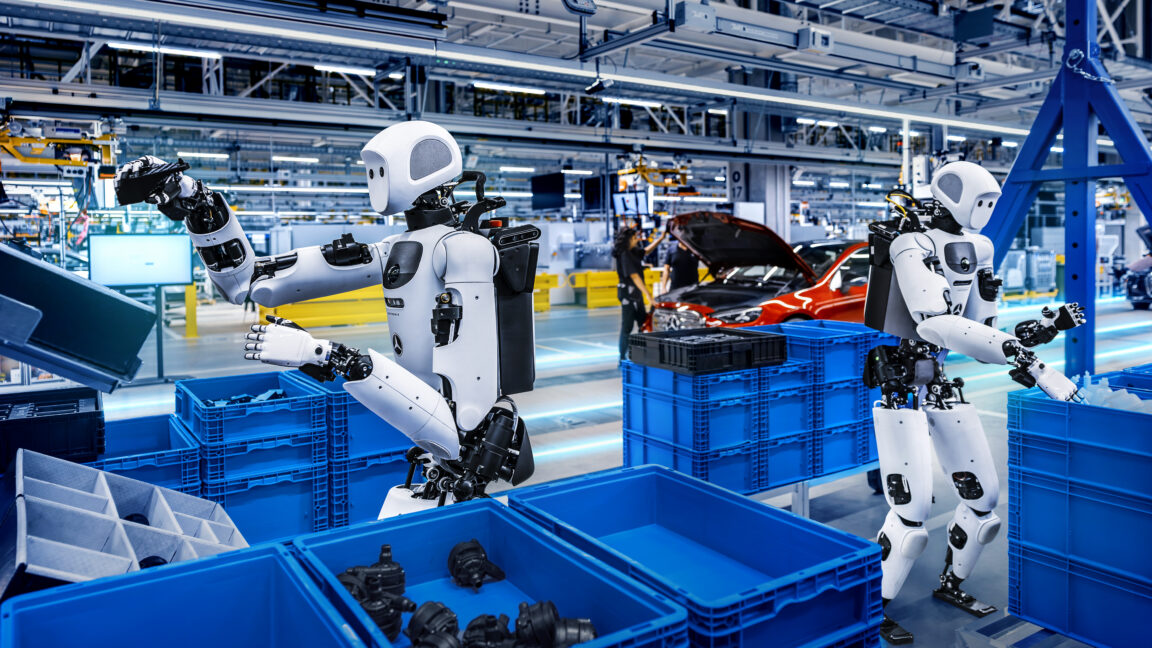
The platform has already demonstrated practical utility, with some Gemini robots successfully performing actual work in Mercedes-Benz factories. Furthermore, the team is preparing for a future scenario where robots operate alongside humans, supported by an open source safety benchmark.
Platform Architecture
DeepMind’s physical AI platform utilizes several computational layers connecting user input to robotic action. Key components include:
- Vision-Language Model: Gemini Embodied Reasoning, which takes instructions and uses live video to plan how the robot can accomplish a task.
- Vision-Language-Action (VLA): This component generates robot actions, such as moving an actuator. This is the core of Gemini Robotics, which has been updated to version 2.5.
Performance and Evaluation
Gemini Robotics 2.5 shows improved performance in tasks demanding a high degree of dexterity. The model was rigorously evaluated across more than 200 activities, including:
- Serving food with tongs.
- Using a pipette, as seen in a laboratory setting.
Notable Dexterity Feat
Google also showcased a significant achievement involving Apptronik’s Apollo 2 humanoid robot utilizing Gemini Robotics 2.5. This robot was able to tie a bow with its five-fingered hands. This feat is notable because it demonstrates the robot’s ability to manipulate deformable objects, such as ribbon, which are notoriously difficult for robots to handle.
Source
arstechnica.com
This story summarizes reporting from the publisher. Read the full piece at the source.
Written by
Hintsphere Staff
Writes for the Hintsphere desk.
